
Leg Pain Despite a Normal MRI? | Spine Comics Episode 6
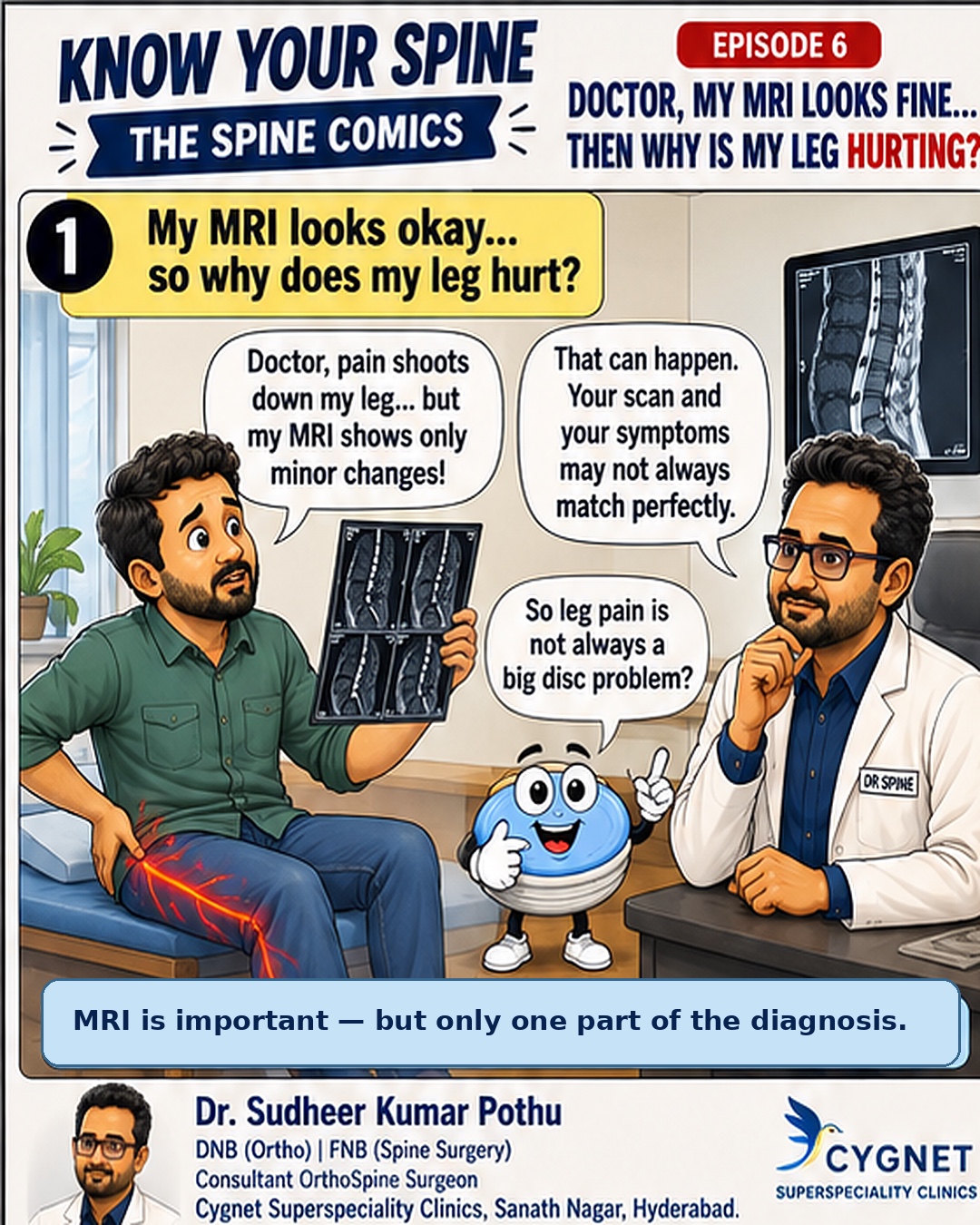
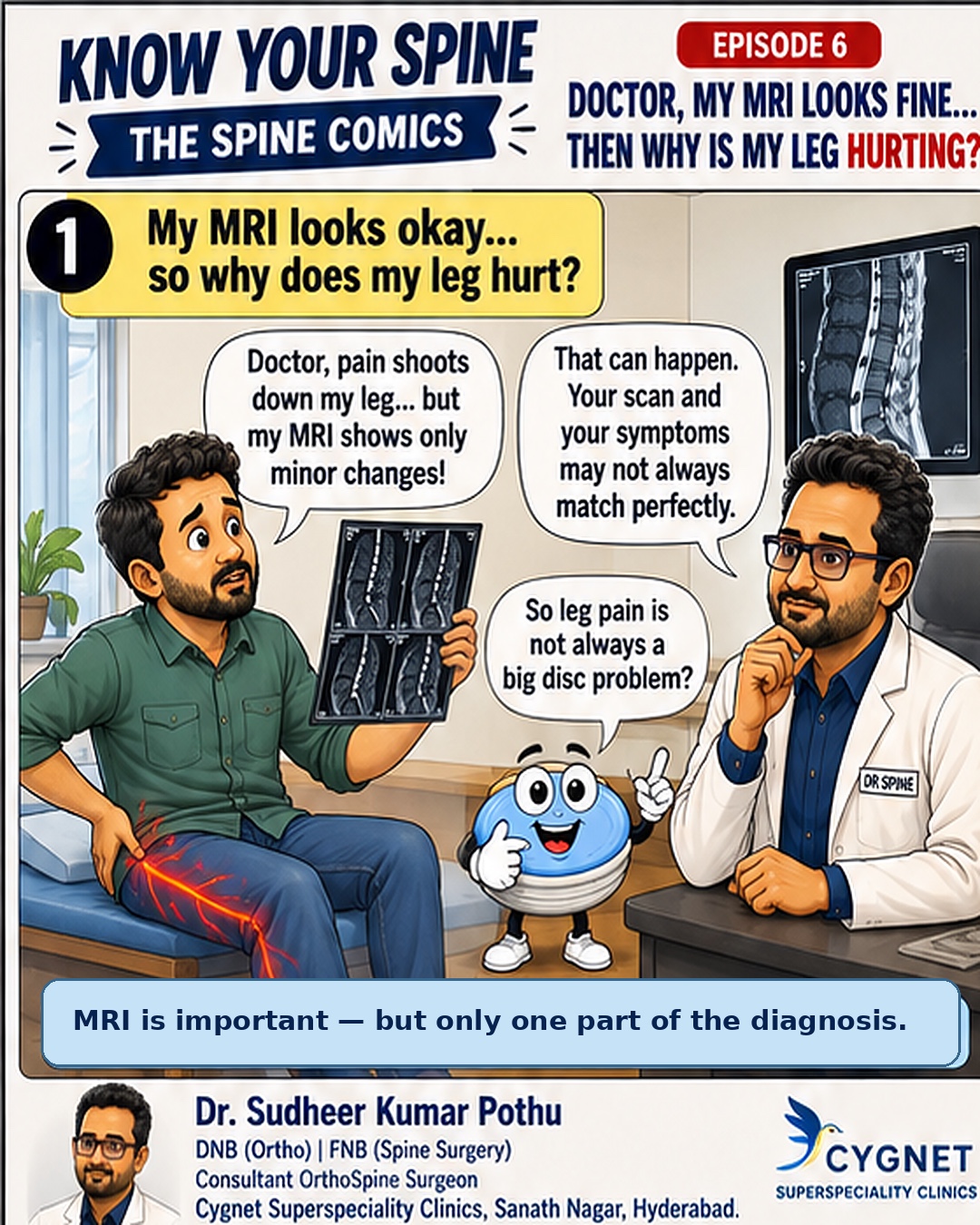
“Doctor, my MRI shows only minor changes. Why does my leg still hurt?” This is a common concern among people seeking sciatica treatment in Hyderabad. Shooting pain, burning, tingling or numbness can feel alarming when the scan report seems reassuring. Your pain deserves assessment, even when the MRI does not describe a large disc prolapse.
At Cygnet Superspeciality Clinics, Sanath Nagar, Hyderabad, Dr. Sudheer Kumar Pothu assesses symptoms, clinical examination and imaging together. Know Your Spine: The Spine Comics, Episode 6 explains why this combined approach matters.
Why can leg pain persist when MRI looks normal?
MRI provides pictures of spinal structures, including discs, nerves and the spinal canal. However, the severity of visible changes does not always correspond to pain intensity. Some people have disc changes without symptoms; others experience significant symptoms with relatively limited findings.
Nerve irritation or inflammation may contribute without a large disc herniation. Equally, the source of pain may lie outside the lumbar spine. A reassuring lumbar MRI therefore does not automatically establish the cause of leg pain or exclude every relevant condition.
Why clinical examination matters
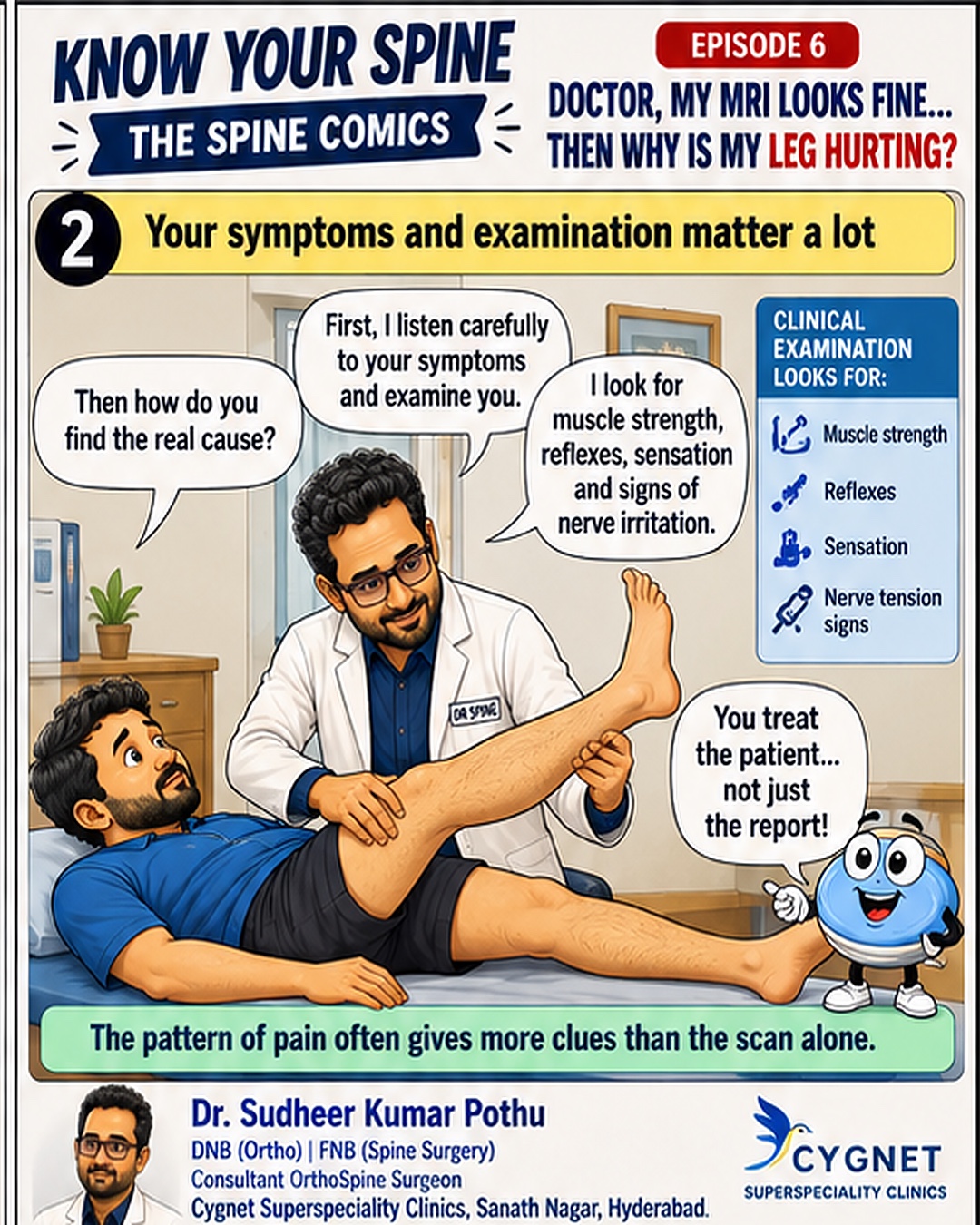
The assessment starts with your story: where the pain begins, how far it travels, what triggers it and whether numbness or weakness accompanies it. Pain during walking, prolonged sitting, coughing or particular hip movements can provide different clues.
Examination may include walking assessment, muscle strength, reflexes, sensation and nerve tension tests, such as the straight leg raise. Hip movement and circulation may also need checking. No single test gives every answer; the pattern of findings helps guide diagnosis.
Is every shooting leg pain sciatica?
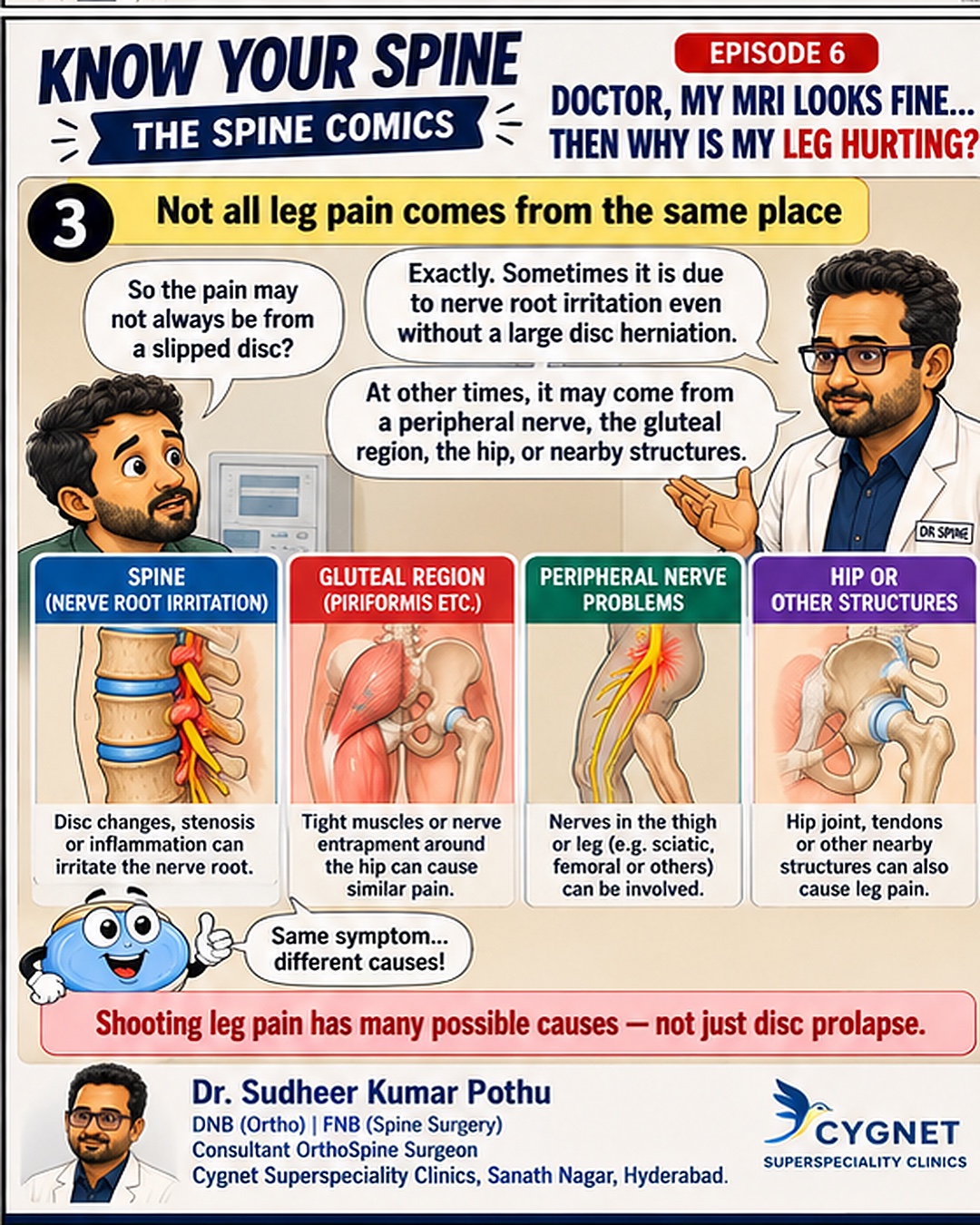
No. Sciatica describes symptoms associated with irritation or compression affecting the sciatic nerve pathway, commonly involving lumbar nerve roots. Similar symptoms can arise from other conditions.
Possible sources include lumbar disc disease or spinal stenosis, peripheral nerve entrapment, deep gluteal nerve irritation, hip joint disorders, and nearby muscles or tendons. Diabetes related neuropathy and circulation problems may also need consideration, depending on the symptoms.
These conditions require different approaches. Labeling every episode as a “slipped disc” may delay appropriate care. Likewise, piriformis syndrome should not be assumed simply because a lumbar MRI appears reassuring.
What tests and treatments might help?
Further investigations are selected when they could clarify the diagnosis or change treatment. EMG and nerve conduction studies may help distinguish certain nerve root problems from peripheral nerve disorders, but they are not necessary for everyone. Additional imaging or blood tests depend on the clinical findings.
Treatment commonly begins with education, activity, individualized physiotherapy and exercises. Avoid prolonged bed rest. Medicines may be considered after reviewing benefits, risks and other health conditions; nerve pain medicines are not automatically appropriate for sciatica.
Selected patients may benefit from targeted injections. Surgery is considered when there is a suitable diagnosis and indication, such as significant neurological deterioration or persistent disabling symptoms with matching structural findings. A mildly abnormal MRI alone is not a reason for surgery.
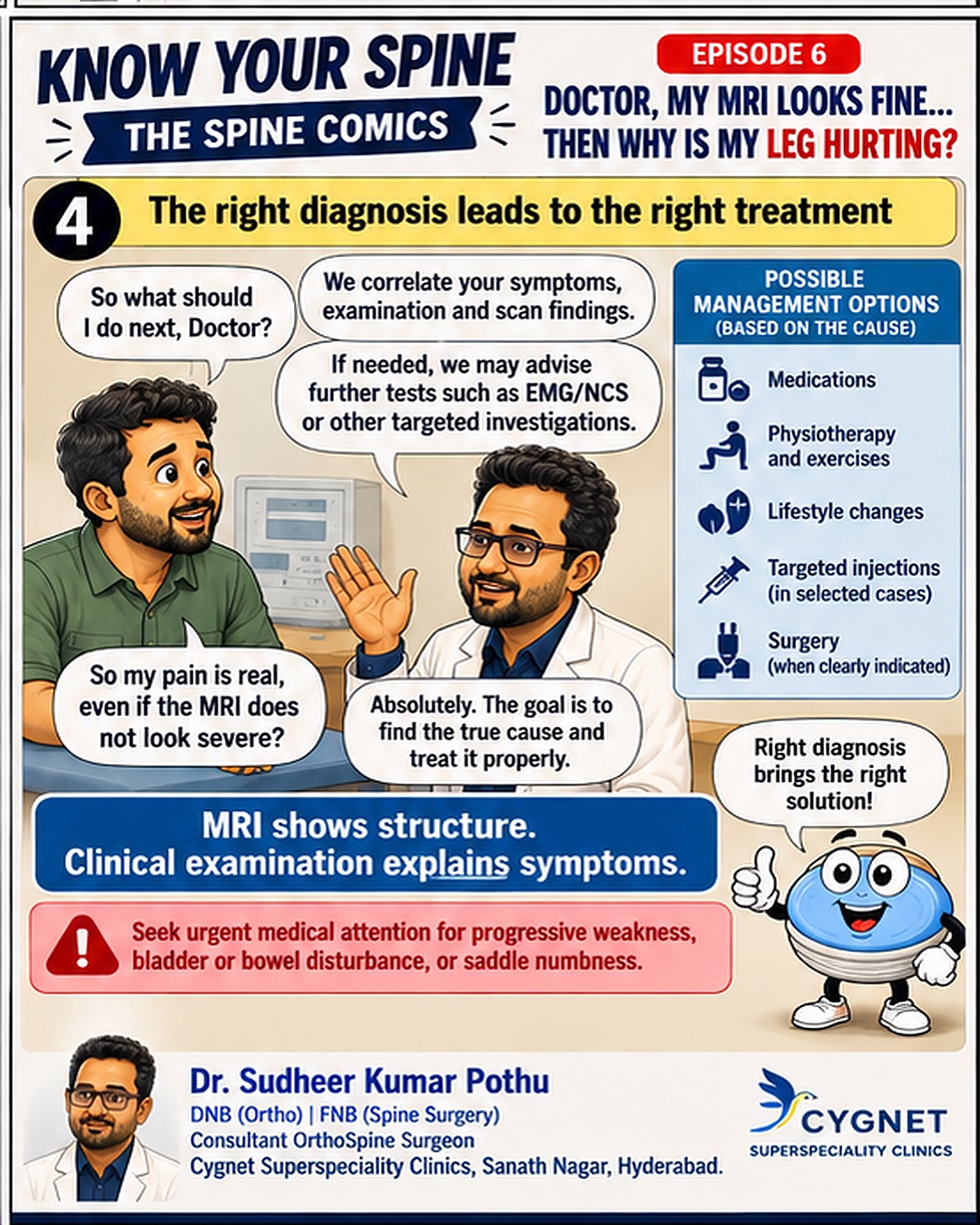
When should you seek urgent help?
Attend an emergency department immediately for new difficulty passing urine, loss of bladder or bowel control, or numbness around the genitals or saddle area. Rapidly worsening leg weakness also requires urgent assessment. Do not wait for a routine clinic appointment.
Consult a spine specialist in Sanath Nagar
If leg pain persists, worsens or limits daily activities, arrange an assessment with Dr. Sudheer Kumar Pothu, DNB (Ortho), FNB (Spine Surgery), Consultant Orthopaedic and Spine Surgeon at Cygnet Superspeciality Clinics, Sanath Nagar, Hyderabad. Bring your MRI images and report. The aim is to identify the cause and build a treatment plan that fits your symptoms and goals.
Book an appointment at Cygnet Clinics
Further reading
NICE: Low back pain and sciatica · NHS: Sciatica
#CygnetClinics #DrSudheerKumarPothu #KnowYourSpine #SpineComics #Sciatica #LegPain #SpineHealth #SanathNagar #Hyderabad
