

Is Too Much Smartphone Use Hurting Your Neck? | Spine Comics Episode 4
Smartphone use is part of everyday life, but long periods in one position—and many short sessions that add up across the day—can be associated with neck and shoulder discomfort. The aim is not to avoid technology completely. It is to use it more comfortably, change position often and keep moving.
Why can smartphone use be linked with neck pain?
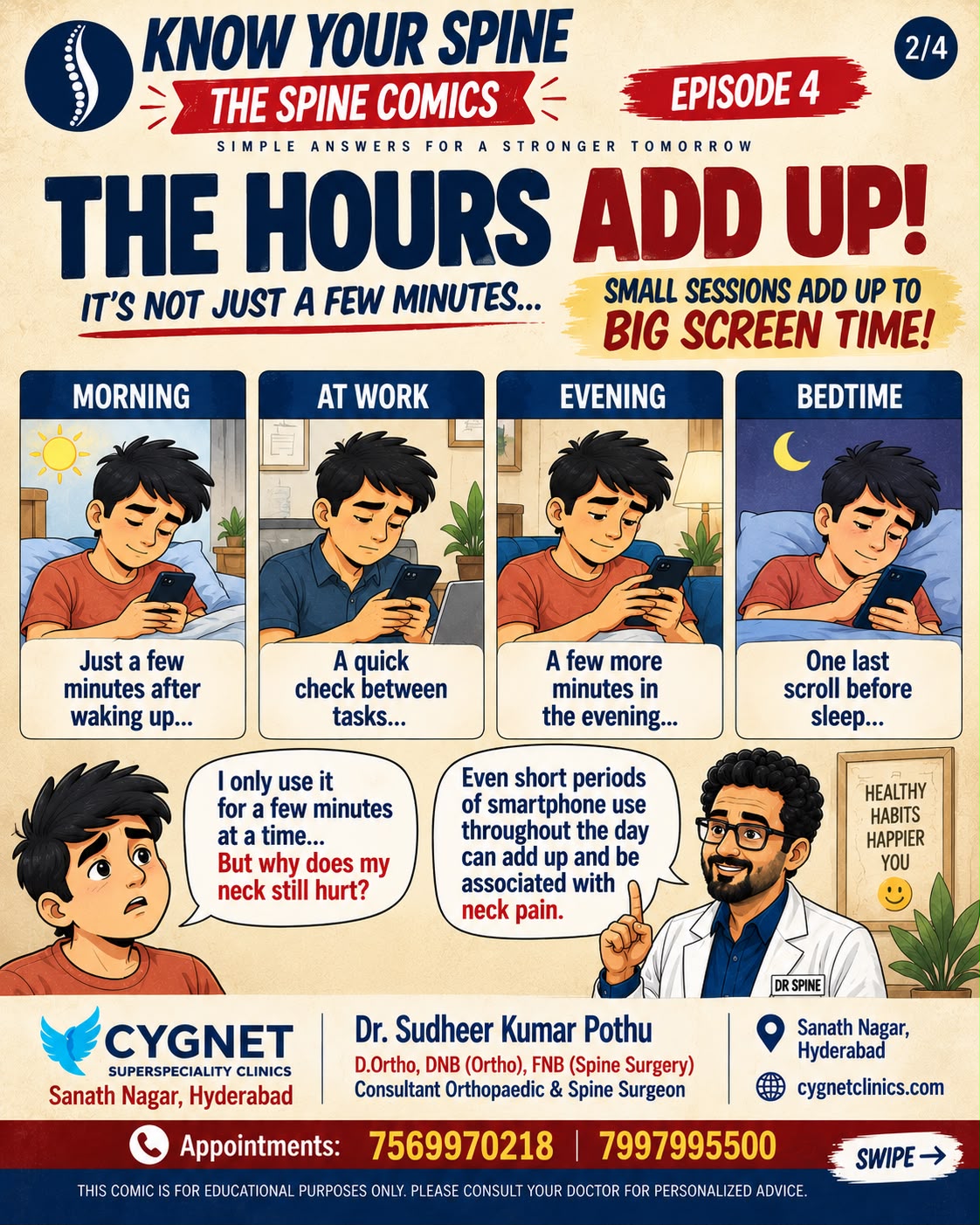
Looking down at a screen for a long time may keep the neck and upper-back muscles working in the same position. Repeated use without enough movement can contribute to fatigue, stiffness or pain. Symptoms are influenced by several factors, so the phone is not always the only cause.
Screen time can also be easy to underestimate. A few minutes after waking, quick checks during work, evening browsing and one last scroll at bedtime can become several hours across the day.
How can you make phone use more neck-friendly?
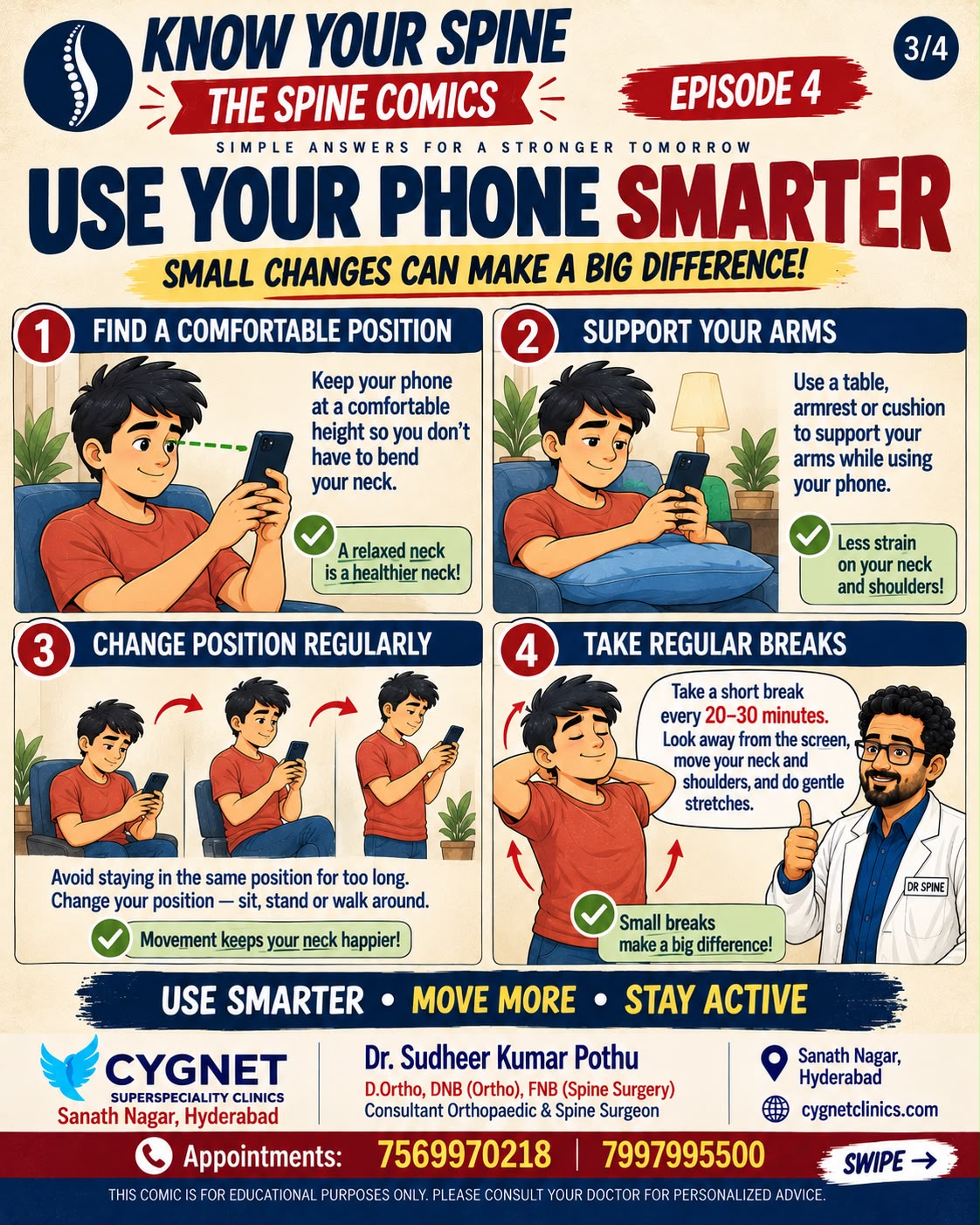
- Find a comfortable position: bring the screen to a comfortable height instead of repeatedly bending your neck toward it.
- Support your arms: use a table, armrest or cushion when practical to reduce sustained effort in the neck and shoulders.
- Change position regularly: alternate between sitting, standing and walking rather than searching for one “perfect” posture.
- Take regular movement breaks: every 20–30 minutes is a useful reminder to look away from the screen, relax your shoulders and move gently within a comfortable range.
Movement matters more than a perfect posture
No single posture guarantees that pain will never occur. A practical goal is to avoid staying still for too long. Get up and walk, gently move your neck and shoulders, and remain physically active. If an exercise causes pain, dizziness, tingling or other unusual symptoms, stop and seek professional advice.
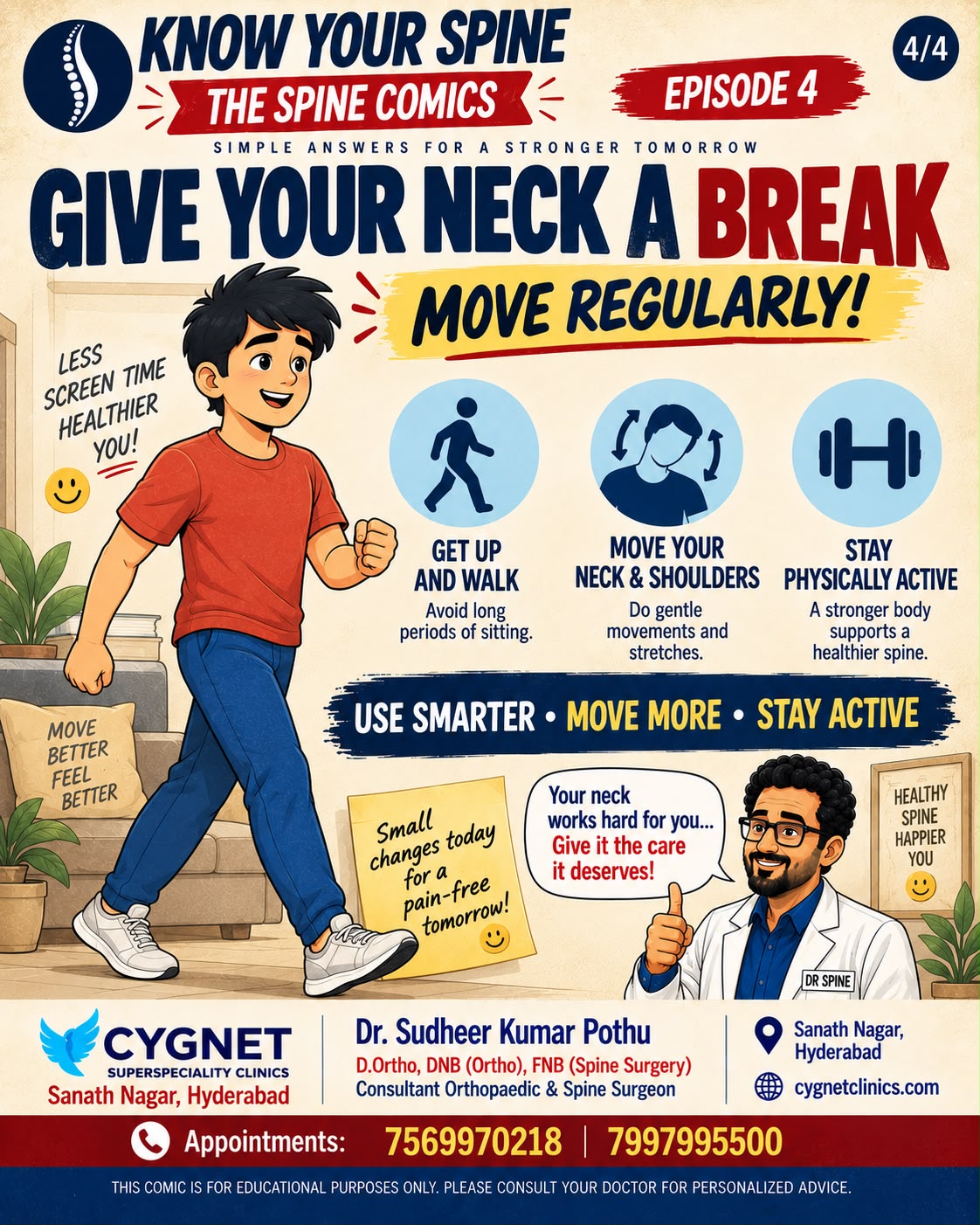
Take-home message: You do not need to give up your smartphone. Notice how long you use it, support your arms, keep the screen at a comfortable height, vary your position and move regularly.
When should you seek medical assessment?
Arrange an evaluation if neck pain is persistent, worsening, repeatedly interfering with sleep or daily activity, or spreading into an arm. Seek prompt medical care after significant injury or if pain is accompanied by arm or hand weakness, persistent numbness, problems with balance or walking, fever, unexplained weight loss, severe unrelenting pain, or changes in bladder or bowel control.
Need a spine evaluation in Hyderabad?
Dr. Sudheer Kumar Pothu
D.Ortho, DNB (Ortho), FNB (Spine Surgery)
Consultant Orthopaedic & Spine Surgeon
Cygnet Superspeciality Clinics
Sanath Nagar, Hyderabad
Appointments: 7569970218 | 7997995500
cygnetclinics.com
This article is for general educational purposes and does not replace an individual medical consultation. Treatment recommendations require clinical evaluation.
