
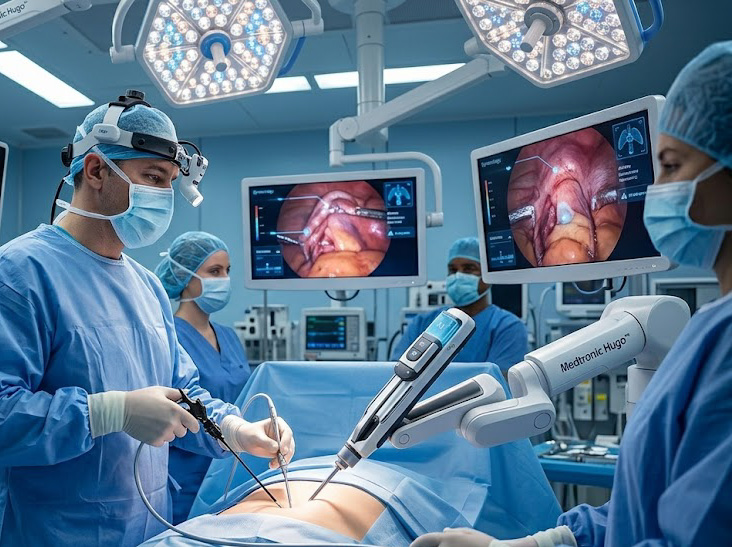
Laparoscopic Surgery
Advances in Minimally Invasive Care
In the past, major surgery meant large incisions, significant pain, and weeks of recovery. Today, minimally invasive surgery (MIS)—specifically laparoscopic and robotic-assisted techniques—has turned that reality on its head.
Whether you are scheduled for a gallbladder removal, hernia repair, or complex gynecological surgery, understanding the latest technological breakthroughs can help you make an informed decision about your care.
What is Laparoscopic Surgery?
Laparoscopic surgery is a technique where a surgeon performs an operation through several small incisions (usually 5–12mm) rather than one large opening. A tiny camera, called a laparoscope, transmits high-definition images to a monitor, allowing the surgeon to see inside the body with incredible clarity.
Key Benefits of the “Keyhole” Approach:
- Reduced Pain: Smaller incisions mean less trauma to the skin and muscles.
- Faster Recovery: Most patients return to daily activities within days, not weeks.
- Minimal Scarring: The tiny marks often fade to be nearly invisible over time.
- Lower Infection Risk: Less exposure of internal organs to the environment reduces the chance of post-operative complications.
2026: The New Frontiers in Minimally Invasive Surgery
The field of laparoscopy is currently undergoing a “digital revolution.” Here are the top three advances currently transforming patient outcomes at leading Hospitals.
1. AI-Driven Surgical Navigation
Artificial Intelligence is no longer science fiction in the OR. New systems now provide surgeons with real-time data overlays, identifying critical structures like nerves and blood vessels to prevent accidental injury. AI also helps in mapping the most efficient “surgical path,” leading to shorter anesthesia times.
2. Robotic-Assisted Systems (The Next Gen)
While traditional laparoscopy remains a powerhouse, new robotic platforms like the da Vinci 5 and Medtronic Hugo™ offer:
- Enhanced Dexterity: Instruments that “wrist” and rotate with more flexibility than the human hand.
- 3D Visualization: Moving beyond flat 2D screens to immersive, high-depth imagery.
- Tremor Filtration: Computerized stabilization that ensures every movement is perfectly precise.
3. Advanced Energy Devices
Next-gen hybrid energy tools (combining ultrasonic and bipolar technology) now allow for simultaneous cutting and cauterizing. This means near-zero blood loss and even faster healing for the surrounding tissue.
Laparoscopic vs. Robotic Surgery: Which is Right for You?
While both are minimally invasive, the choice often depends on the complexity of the procedure.
| Feature | Traditional Laparoscopy | Robotic-Assisted Surgery |
| Best For | Routine cases (gallbladder, simple hernias) | Complex anatomy (prostate, deep pelvic issues) |
| Vision | 2D High-Definition | 3D Immersive Depth |
| Precision | High (Human-guided) | Ultra-High (Computer-stabilized) |
| Cost | Typically more affordable | Higher due to advanced tech |
Recovery Tips for Optimal Healing
Even with the best technology, your post-operative care is vital.
- Early Mobility: Try to walk a little bit every day starting 24 hours after surgery. This prevents blood clots and helps move the “CO2 gas” used during the procedure, which can sometimes cause shoulder pain.
- Wound Hygiene: Keep your tiny incision sites clean and dry. Avoid soaking in baths for at least two weeks.
- Listen to Your Body: While you’ll feel better quickly, avoid heavy lifting for the timeframe recommended by your surgeon (usually 2–4 weeks).
Conclusion: A Future of Precision
The goal of modern surgery is to fix the problem with the least amount of “collateral damage” to the body. With the integration of AI and robotics, minimally invasive surgery is safer and more effective than ever.
Are you considering a surgical procedure? Consult with our specialist to see if you are a candidate for a laparoscopic or robotic-assisted approach.
