
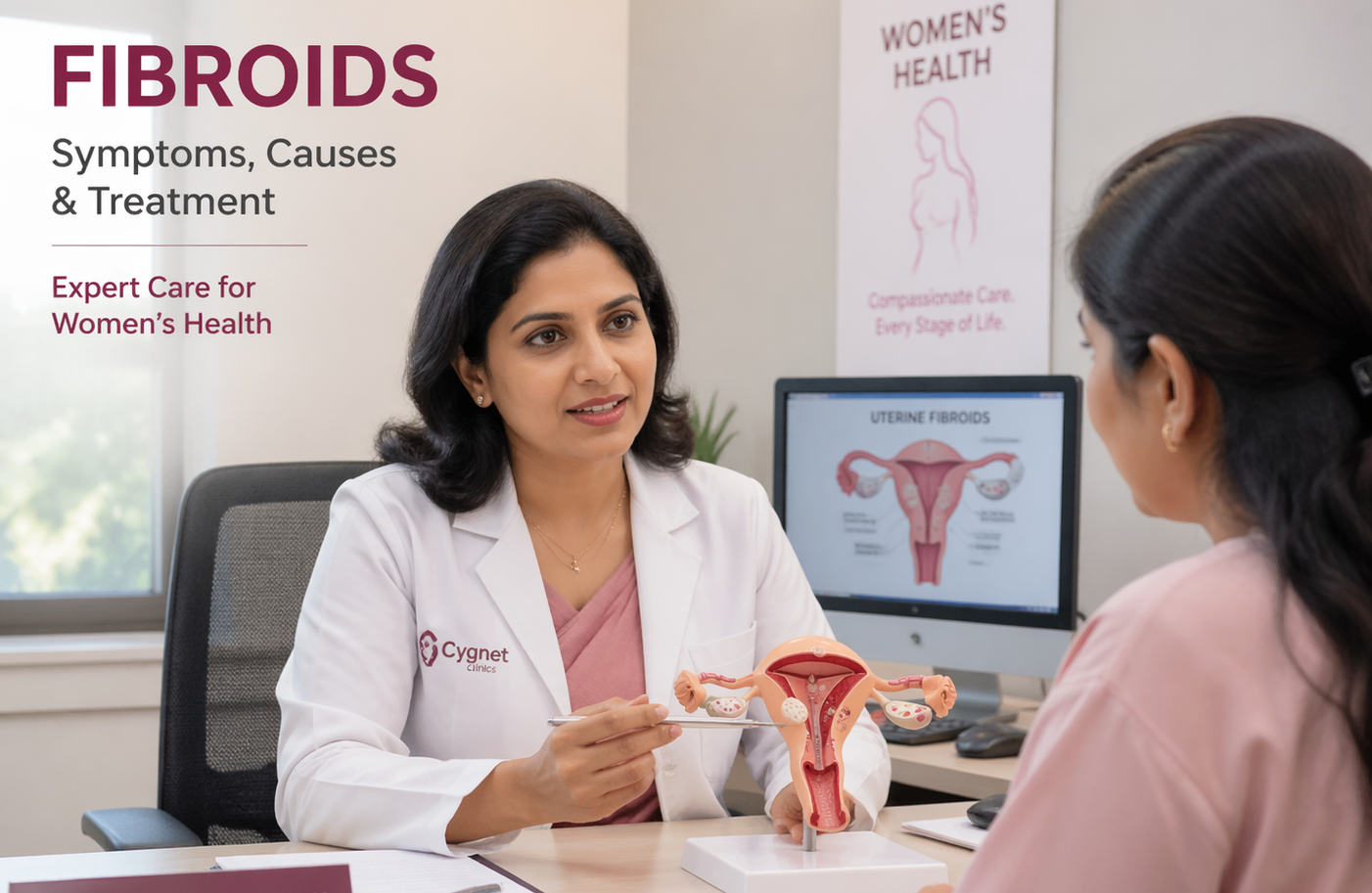
Fibroids – The Uterus myomas
Symptoms, Causes, Treatment & When to See a Doctor.
If you have been told you have fibroids, or you are experiencing heavy periods, pelvic pain, bloating, or fertility concerns, you are not alone. Fibroids are very common in women, especially during the reproductive years. The good news is that many fibroids can be managed effectively with the right diagnosis and treatment.
At Cygnet Clinics, we help women understand fibroids in simple language and choose the best treatment based on their symptoms, age, family plans, and overall health.
What Are Fibroids?
Fibroids are non-cancerous growths that develop from the muscle layer of the uterus (womb). Their medical name is uterine leiomyomas or myomas.
They can be:
- Very small (like a seed)
- Medium-sized
- Large enough to enlarge the abdomen
Fibroids are not cancer, and most women with fibroids never develop cancer from them.
Where Do Fibroids Grow?
Fibroids can grow in different parts of the uterus:
- Intramural fibroids – inside the wall of the uterus
- Submucosal fibroids – bulging into the uterine cavity
- Subserosal fibroids – growing on the outer surface of the uterus
- Pedunculated fibroids – attached by a stalk
The type and location often decide the symptoms and treatment.
Common Symptoms of Fibroids
Some women have no symptoms and discover fibroids during a routine scan. Others may experience:
Menstrual Symptoms
- Heavy periods
- Prolonged bleeding
- Passing clots
- Painful periods
Pelvic Symptoms
- Lower abdominal pain
- Pressure in the pelvis
- Bloating or swelling
- Frequent urination
- Constipation
Reproductive Symptoms
- Difficulty conceiving
- Recurrent miscarriage
- Pregnancy complications in some cases
General Symptoms
- Tiredness due to anemia
- Weakness
- Back pain
If you are experiencing these symptoms, it is wise to consult a gynecologist for evaluation.
What Causes Fibroids?
The exact cause is not fully understood, but fibroids are linked to:
- Hormones such as estrogen and progesterone
- Family history
- Increasing age during reproductive years
- Obesity
- Delayed pregnancy
- Lifestyle factors
Fibroids often shrink after menopause because hormone levels decrease.
Who Is at Risk?
You may have a higher chance of fibroids if you:
- Are between 30 and 50 years of age
- Have a family history of fibroids
- Are overweight
- Have never been pregnant
- Started periods early
How Are Fibroids Diagnosed?
At Cygnet Clinics, diagnosis usually includes:
1. Medical History
Your doctor asks about periods, pain, fertility plans, and symptoms.
2. Physical Examination
A pelvic examination may detect an enlarged uterus.
3. Ultrasound Scan
This is the most common and useful test to confirm fibroids.
4. Additional Tests (if needed)
- Blood tests for anemia
- MRI scan
- Hysteroscopy
- Fertility workup
Treatment for Fibroids
Treatment depends on:
- Size and number of fibroids
- Symptoms
- Age
- Desire for future pregnancy
- Overall health
1. Observation (Watchful Waiting)
If fibroids are small and symptom-free, regular monitoring may be enough.
2. Medicines
Medicines may help control:
- Heavy bleeding
- Pain
- Hormonal symptoms
These may reduce symptoms but may not permanently remove fibroids.
3. Minimally Invasive Procedures
Depending on suitability:
- Hysteroscopic fibroid removal
- Laparoscopic surgery
- Uterine artery embolization (selected cases)
4. Surgery
For large, multiple, or troublesome fibroids:
Myomectomy
Fibroids are removed, uterus is preserved. Good option for women planning pregnancy.
Hysterectomy
Removal of uterus. Considered when family is complete and symptoms are severe.
Can Fibroids Affect Pregnancy?
Yes, in some women fibroids may:
- Reduce fertility
- Distort the uterine cavity
- Increase miscarriage risk
- Cause pain during pregnancy
- Affect delivery planning
Many women with fibroids still have healthy pregnancies. Early consultation is important.
When Should You See a Doctor?
Please seek medical advice if you have:
- Heavy bleeding every month
- Severe period pain
- Pelvic pressure
- Rapid abdominal enlargement
- Difficulty getting pregnant
- Repeated miscarriages
- Tiredness or low hemoglobin
- Bleeding between periods
Early diagnosis can prevent complications.
Can Fibroids Be Prevented?
There is no guaranteed prevention, but these habits may help overall reproductive health:
- Maintain healthy weight
- Exercise regularly
- Eat fruits and vegetables
- Manage stress
- Regular gynecology checkups
- Seek care early for abnormal periods
Why Choose Cygnet Clinics for Fibroid Care?
At Cygnet Clinics, we focus on:
- Patient-friendly explanations
- Accurate diagnosis
- Personalized treatment plans
- Fertility-conscious care
- Women’s health support
- Compassionate follow-up
Your treatment is chosen based on what is best for you, not a one-size-fits-all approach.
Fibroid Treatment Near You | Local Women’s Health Care
If you are searching for:
- Fibroid treatment near me
- Best doctor for fibroids
- Heavy periods treatment near me
- Gynecologist for fibroids
- Uterus fibroid scan and treatment
- Women’s clinic for fibroids
Contact Cygnet Clinics for professional guidance and women’s health care.
Frequently Asked Questions (FAQ)
Are fibroids cancer?
No. Fibroids are usually non-cancerous.
Do all fibroids need surgery?
No. Many can be monitored or treated with medicines.
Can fibroids come back after removal?
Yes, some fibroids may recur after myomectomy.
Can I get pregnant with fibroids?
Many women do, but some may need treatment first.
Is heavy bleeding due to fibroids dangerous?
Heavy bleeding can cause anemia and weakness, so it should be evaluated.
Book a Consultation
If you have symptoms of fibroids or concerns about fertility, periods, or pelvic pain, book a consultation with Dr. Gowthami Mullangi at Cygnet Clinics for expert and compassionate care.
