
Heart Failure – What is it?
Understanding Your Heart’s Strength and How to Manage It
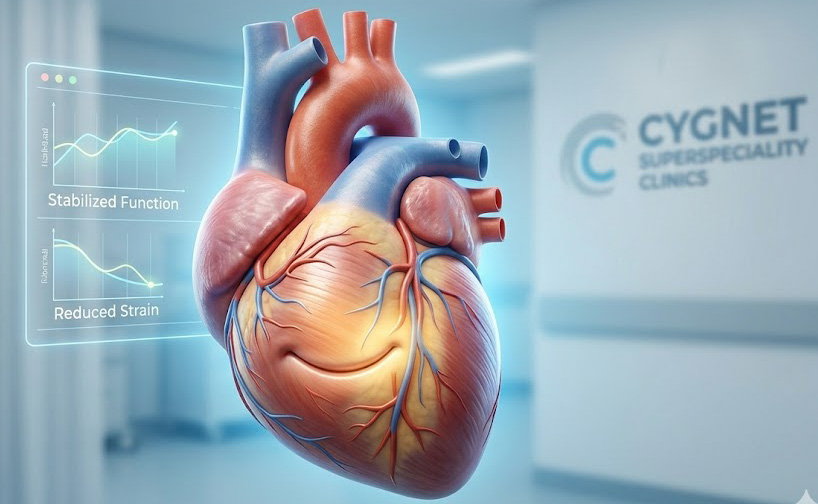
If you or a loved one has recently been diagnosed with heart failure, the name itself can be frightening. However, heart failure does not mean the heart has stopped working. It means the heart is not pumping blood as efficiently as it should.
In 2026, with the help of precision cardiology and modern management plans, people with heart failure are living longer, more active lives than ever before.
What Exactly is Heart Failure?
Think of your heart as a pump that supplies oxygen-rich blood to your entire body. In a healthy heart, the muscles are strong and flexible. In heart failure:
- The pump becomes weak: The heart muscle can’t squeeze hard enough to push blood out.
- The pump becomes stiff: The heart can’t relax properly to fill up with enough blood.
When this happens, blood “backs up” in the system, which is why patients often experience swelling or fluid in the lungs.
Recognizing the “Red Flag” Symptoms
Heart failure symptoms can be subtle at first. Doctors often use the acronym FACES to help patients remember what to look for:
- F – Fatigue: Feeling unusually tired even after resting.
- A – Activity Limitation: Finding it hard to do normal chores or walk short distances.
- C – Congestion: A persistent cough or wheezing (often worse at night).
- E – Edema (Swelling): Swelling in the ankles, legs, or abdomen.
- S – Shortness of Breath: Feeling winded while lying flat or during light exercise.
The Science of 2026: Modern Treatments
Treatment has moved far beyond just “resting.” At Cygnet Superspeciality Clinics, we focus on the “Four Pillars” of heart failure therapy which have been proven to rewire and strengthen the heart muscle:
- SGLT2 Inhibitors: Originally for diabetes, these “miracle” drugs now help the heart pump better and protect the kidneys.
- ARNI Therapy: Advanced medications that help relax blood vessels and reduce the strain on the heart.
- Beta-Blockers: These slow the heart rate, giving the heart muscle time to recover and “remodel” itself.
- Mineralocorticoid Antagonists (MRAs): These prevent scarring of the heart tissue.
Did You Know? New AI-powered wearable sensors can now predict a heart failure “flare-up” up to two weeks before you feel any symptoms, allowing your doctor to adjust your meds early.
3 Simple Lifestyle Shifts for a Stronger Heart
Managing heart failure is a partnership between you and your cardiologist.
- Watch Your Salt: High sodium makes your body hold onto water, putting massive pressure on your heart. Aim for fresh herbs instead of the salt shaker.
- Monitor Your Weight: A sudden gain of 1–2kg in a single day usually isn’t fat—it’s fluid. This is a sign to call your doctor immediately.
- Keep Moving: Gentle walking (Zone 2 cardio) helps your muscles use oxygen more efficiently, taking the load off your heart.
Conclusion: Living Well with Heart Failure
A diagnosis is a starting point, not a finish line. With the right combination of technology, medication, and lifestyle changes, you can regain your energy and protect your future.
If you are experiencing breathlessness or unusual swelling, don’t wait. Early intervention is the key to “reversing” the strain on your heart.
