
Kawasaki Disease Symptoms & Treatment Guide | Cygnet Clinics
Prolonged Fever with redness of skin and eyes? It can be Kawasaki !!!
A Parent’s Guide to Kawasaki Disease Symptoms and Care
Kawasaki Disease (KD) is a condition that causes inflammation in the walls of small and medium-sized blood vessels throughout the body, including the coronary arteries. While it primarily affects children under age 5, it can be an intimidating diagnosis for any parent due to its sudden onset.
The good news? With early diagnosis and expert medical intervention, the vast majority of children recover fully without long-term heart complications.
What Causes Kawasaki Disease?
Currently, the exact cause of Kawasaki Disease remains unknown.
Medical researchers believe it is not a contagious illness (it won’t spread like a cold). Instead, it is likely an abnormal immune response triggered by an environmental factor—such as a virus or bacteria—in children who have a specific genetic predisposition.
Recognizing the Symptoms: The “5-Day” Rule
There is no single blood test to “prove” Kawasaki Disease. Doctors diagnose it based on a physical examination and a history of symptoms.
The primary indicator is a high fever lasting at least five days, accompanied by at least four of the following five signs:
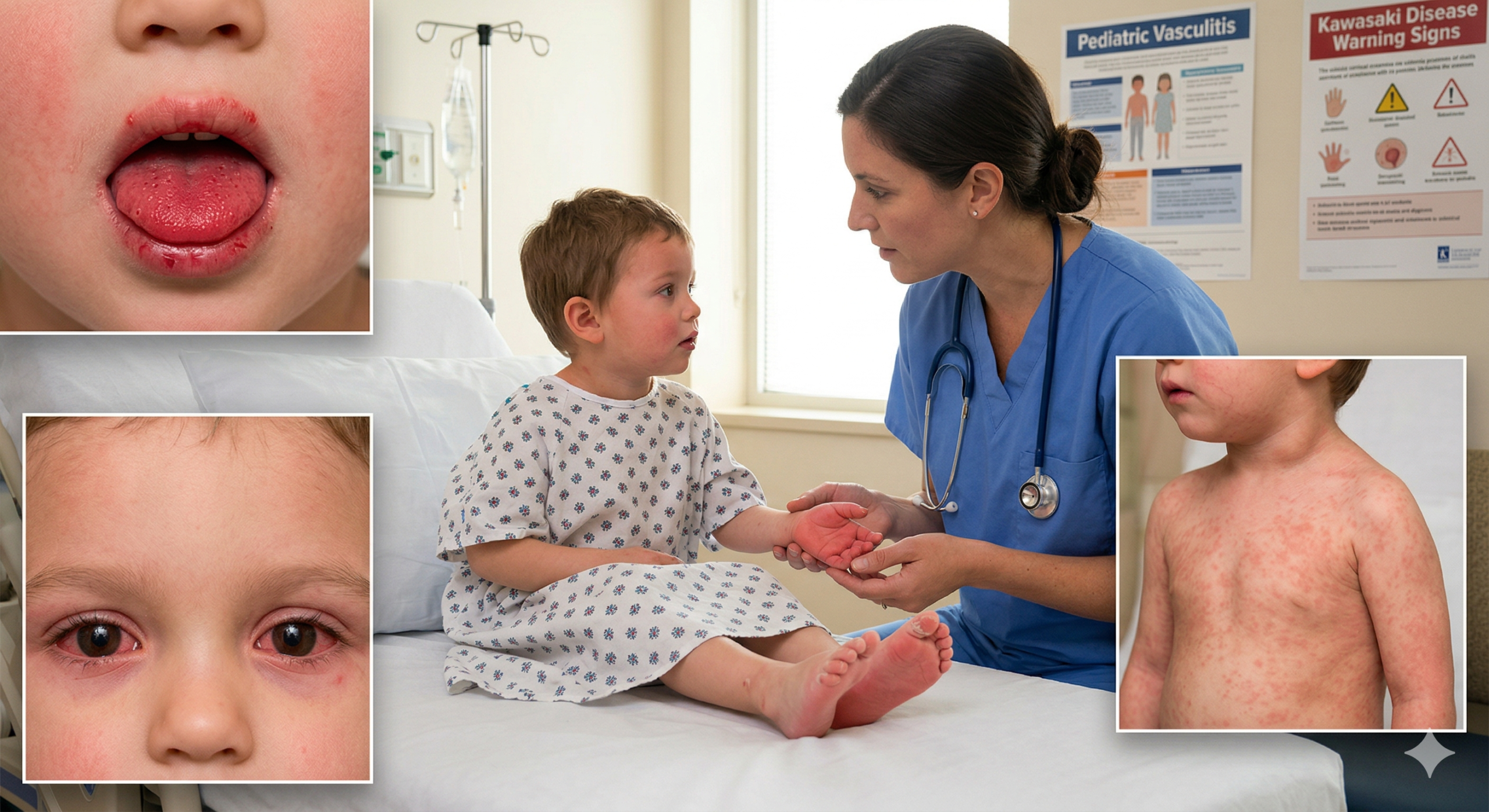
1. Changes in Hands and Feet
- Early Stage: Intense redness or swelling of the palms and soles.
- Late Stage: Peeling of the skin around the fingertips and toes (usually 2–3 weeks after the fever begins).
2. A Widespread Rash
A polymorphous rash (meaning it can take many forms) usually appears on the trunk, back, and groin area.
3. Red Eyes (Conjunctivitis)
Both eyes may appear very red and bloodshot, but importantly, there is no thick discharge or “crusting.”
4. Mouth and Throat Changes
- “Strawberry tongue” (the tongue appears bright red with small, raised bumps).
- Dry, red, or severely cracked lips.
- A very red, inflamed throat.
5. Swollen Lymph Node
A single, firm, swollen lymph node in the neck, typically measuring larger than 1.5 cm.
Potential Heart Complications
The main reason pediatricians take Kawasaki Disease so seriously is its potential impact on the heart. If left untreated, the inflammation can weaken the coronary arteries, leading to an aneurysm (a bulge in the artery wall).
Early treatment significantly reduces this risk, which is why seeing a specialist at the first sign of these symptoms is critical.
Treatment and Recovery
Treatment is always performed in a hospital setting and focuses on cooling the inflammation as quickly as possible.
- IVIG (Intravenous Immunoglobulin): This is a concentrated mix of antibodies that helps reset the immune system. It is most effective when given within the first 10 days of symptoms.
- High-Dose Aspirin: Unlike other childhood illnesses where aspirin is avoided, it is used in KD under strict medical supervision to prevent blood clots and reduce inflammation.
- Follow-Up Care: Every child who has had KD should see a Pediatric Cardiologist for a follow-up echocardiogram to ensure the heart remains healthy.
Expert Care at Cygnet Clinics
If your child has a persistent high fever and you notice any of the “red flags” mentioned above, do not wait. Early intervention is the key to a healthy recovery.
At Cygnet Superspeciality Clinics, our pediatric expert Dr. Vannala Raju provide the comprehensive diagnostic and cardiac monitoring required to keep your child’s heart safe.
Contact your pediatric specialist.
