
Understanding Bronchoscopy
A Clear Guide to Your Lung Health
If you or a loved one are experiencing persistent respiratory issues, your doctor might recommend a bronchoscopy. While the name sounds clinical, the procedure is a vital, routine tool used by specialists to look inside the lungs and provide accurate diagnoses.
At Cygnet Superspeciality Clinics, we believe that understanding your medical procedures is the first step toward recovery. Here is a breakdown of what a bronchoscopy is, why it’s used, and how it helps in modern lung care.
What is a Bronchoscopy?
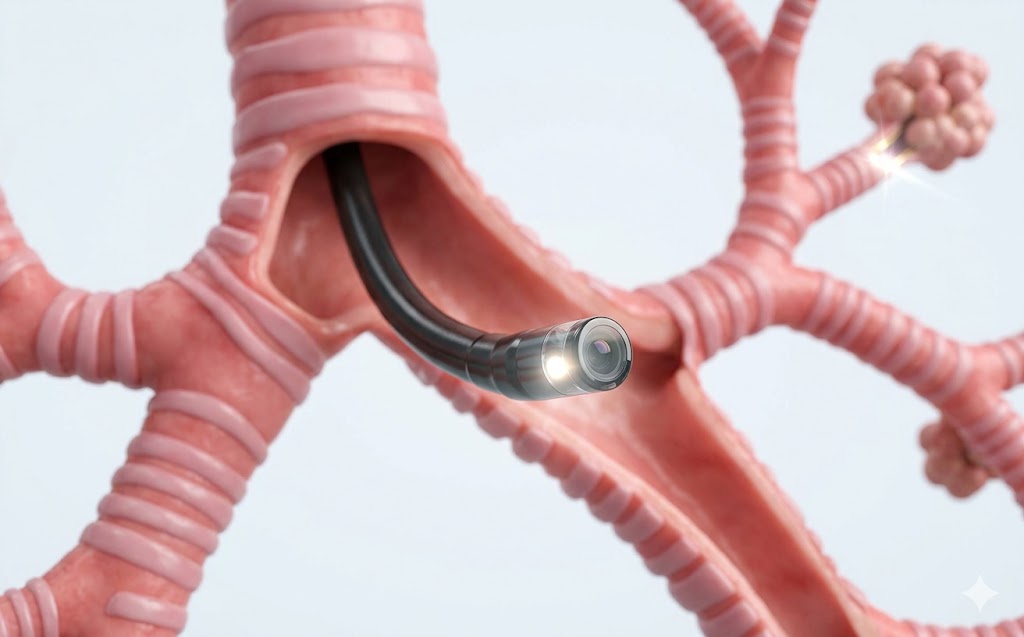
A bronchoscopy is a procedure that allows a doctor (usually a Pulmonologist) to examine your airways—including the throat, larynx (voice box), trachea (windpipe), and the lower airways (bronchi).
The tool used is called a bronchoscope. It is a thin, flexible tube equipped with a light and a high-definition camera at the tip. This camera transmits real-time images to a monitor, giving the medical team a detailed view of your internal lung structure.
Why is a Bronchoscopy Performed?
Doctors use bronchoscopy for two main reasons: Diagnostic (to find out what’s wrong) and Therapeutic (to treat a known problem).
1. Diagnosing Persistent Symptoms
If standard tests like X-rays or CT scans don’t provide a clear answer, a bronchoscopy is used to investigate:
- Chronic Cough: A cough that lasts more than 8 weeks without a known cause.
- Hemoptysis: Coughing up blood.
- Unusual Imaging Results: If a spot, mass, or “shadow” is seen on a chest X-ray.
- Persistent Infections: To identify specific bacteria or fungi in cases of recurring pneumonia.
2. Treating Lung Issues
Bronchoscopy isn’t just for looking; it’s also for acting. Therapeutic uses include:
- Removing Obstructions: Clearing out a foreign object or thick mucus plug blocking the airway.
- Stent Placement: Inserting a small tube to keep an airway open if it’s being narrowed by a tumor.
- Biopsy: Taking a tiny tissue sample to check for lung cancer or inflammatory diseases.
Where is it Used? (Applications in Medicine)
Bronchoscopy is a cornerstone of modern Minimally Invasive Surgery and diagnostics. It is commonly utilized in the following areas:
| Specialty | Common Use Case |
| Oncology | To detect lung cancer and determine if it has spread to lymph nodes. |
| Infectious Disease | To collect “washings” (samples) directly from the lungs to treat complex infections. |
| Critical Care | To clear the airways of patients on ventilators in the ICU. |
| Interventional Pulmonology | Using lasers or cryotherapy through the scope to shrink tumors. |
What to Expect During the Procedure
Modern advances in minimally invasive techniques have made bronchoscopies very safe and manageable for patients.
- Preparation: You will usually be asked to fast for several hours before the test.
- Comfort: You will receive a local anesthetic (numbing spray) for your throat and a sedative to help you stay relaxed or sleep through the procedure.
- The Process: The scope is gently inserted through the nose or mouth. It does not interfere with your breathing.
- Recovery: Most patients go home the same day. You might have a mild sore throat or a hoarse voice for a day or two.
Important Note: If you are experiencing sudden shortness of breath or severe chest pain, please seek emergency medical attention immediately.
