
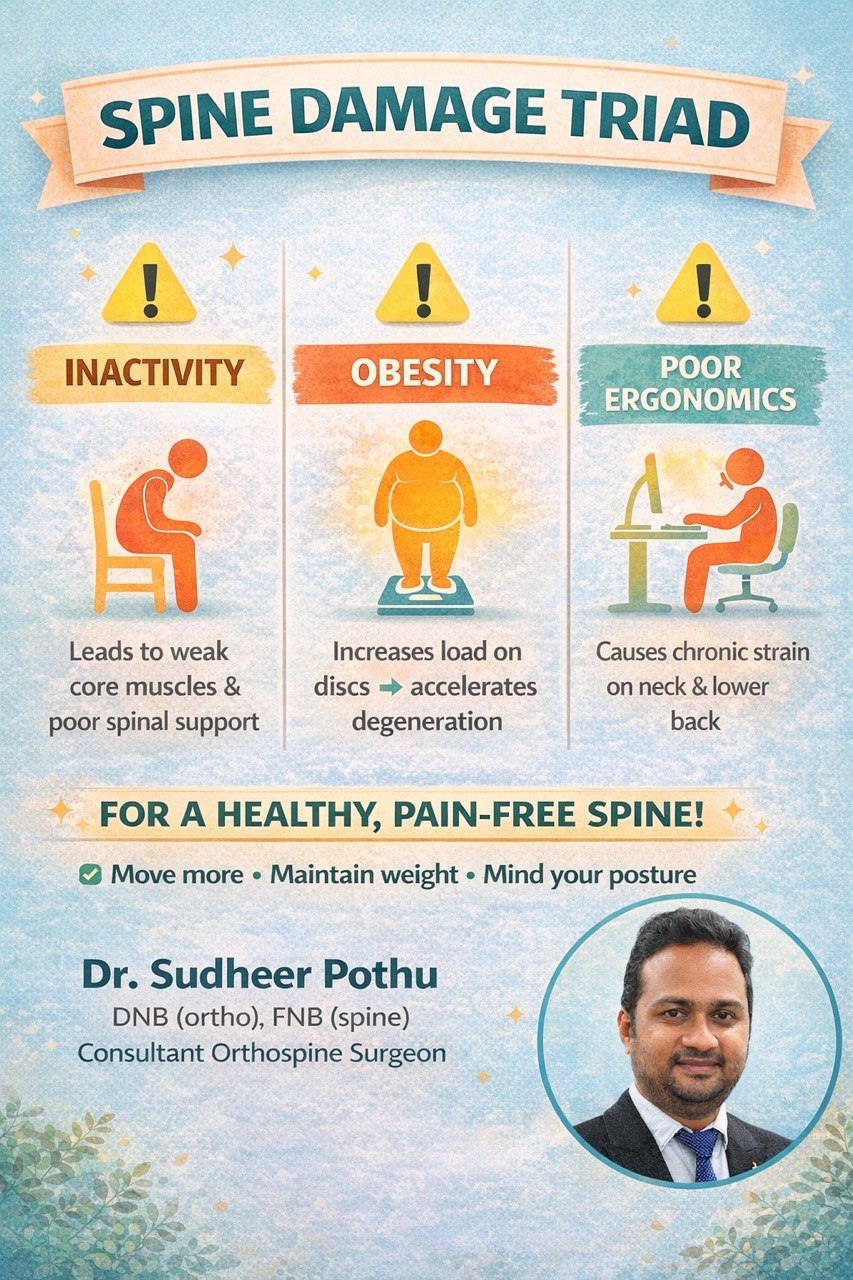
Your Spine Is Like a Car: If You Don’t Move It, It Starts Failing !!
A Simple Step-by-Step Spine Rehabilitation Guide for Everyday People
Back pain has become one of the most common problems in modern life.
And surprisingly, it is affecting younger people more than ever before.
Many people think:
“My MRI is bad. My spine is damaged. I should avoid movement.”
But in reality, for most people, the opposite is true.
A healthy spine needs:
• movement
• strength
• flexibility
• endurance
• recovery
Just like a car parked for years slowly rusts and stiffens, the human spine also becomes weaker when it stops moving.
The good news?
Most spine pain improves when the body becomes stronger, more active, and more confident again.
This blog will help you understand:
• what your spine actually needs
• which exercises help
• which habits worsen pain
• and how to start your own spine rehabilitation program safely.
⸻
First: Understand This Important Truth
Pain does NOT always mean damage
Many people panic after reading MRI words like:
• disc bulge
• degeneration
• dehydration
• spondylosis
But studies show many people without pain also have these MRI findings.
Think of it like:
• wrinkles on skin
• greying hair
• wear marks on a shoe
Not every MRI change is dangerous.
Very often, the real problem is:
weak muscles + poor movement + stress + bad sleep + prolonged sitting
—not severe structural damage.
⸻
Why Modern Spines Are Struggling
Today’s lifestyle creates the perfect environment for back pain:
• sitting for 8–12 hours
• phone/laptop posture
• poor sleep
• stress
• lack of exercise
• weight gain
• weak core muscles
Many people are: under-muscled but overworked.
The spine loses conditioning slowly over years.
⸻
What Does a Healthy Spine Actually Need?
Your spine needs 5 things:
1. Movement
Spines hate prolonged stiffness.
2. Strength
Weak muscles overload joints and discs.
3. Endurance
Your spine should tolerate daily life without fatigue.
4. Flexibility
Tight hips and thoracic spine increase spinal stress.
5. Recovery
Sleep and stress control are part of treatment.
⸻
The Biggest Mistake: Complete Bed Rest
Years ago, people were advised:
“Don’t move. Take rest.”
Now we know:
prolonged rest often worsens back pain.
Too much rest causes:
• weaker muscles
• joint stiffness
• fear of movement
• lower confidence
• poor circulation
Movement is medicine — when done correctly.
⸻
Step 1: Start Walking Again
Walking is one of the best spine exercises
Walking:
• improves circulation
• nourishes spinal discs
• improves endurance
• reduces stiffness
• calms the nervous system
Start simple
If pain is severe:
• start with 5–10 minutes
Then gradually progress:
• 20 minutes
• 30 minutes
• eventually 45 minutes/day
Real-life example
If your back hurts after sitting in office work all day:
a short walk every few hours may help more than lying down.
⸻
Step 2: Improve Mobility
Many painful spines are actually stiff spines.
But remember:
mobility does NOT mean aggressive stretching.
The goal is gentle movement.
Helpful mobility exercises
• Cat-camel movement
• Pelvic tilts
• Thoracic rotations
• Hip flexor stretching
• Hamstring mobility
Example
If your hips are tight, your lower back bends more to compensate.
Over time, this overloads the lumbar spine.
⸻
Step 3: Build Core Stability
Your “core” is not just six-pack abs.
It includes:
• deep abdominal muscles
• spinal stabilizers
• glute muscles
• diaphragm
Think of these muscles as:
the natural support belt of the spine.
When they become weak:
the spine takes more stress.
⸻
Best Beginner Core Exercises 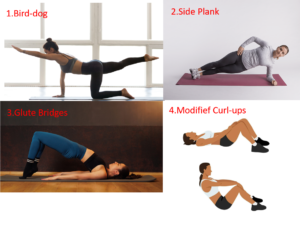
1. Bird-Dog
Improves coordination and spinal control.
2. Side Plank
Builds lateral core endurance.
3. Glute Bridge
Strengthens glutes and reduces lumbar overload.
4. Modified Curl-Up
Improves front core stability safely.
Important rule Start slowly. Back rehabilitation is not a competition.
⸻
Step 4: Strength Training Is Important
Many people think:
“Weights are bad for the spine.”
Actually:
a properly trained spine becomes stronger and more resilient.
The key is:
• good technique
• gradual progression
• consistency
Helpful strength exercises
• Squats
• Step-ups
• Resistance band exercises
• Rows
• Deadlift pattern training
• Farmer carries
Example
A person who lifts groceries safely with strong hips and core often hurts less than someone who avoids all lifting out of fear.
⸻
What About Yoga?
Yoga can help:
• flexibility
• posture
• breathing
• body awareness
• stress reduction
But yoga alone may not build enough strength for everyone.
Some aggressive bending or twisting poses may worsen symptoms in certain patients.
Best approach:
yoga + strength training + walking
⸻
What About Swimming?
Swimming is excellent for:
• low-impact conditioning
• endurance
• movement confidence
Usually:
• backstroke
• gentle freestyle
are better tolerated than aggressive breaststroke.
But swimming alone may not fully strengthen the spine.
⸻
Sleep: The Most Ignored Spine Treatment
Poor sleep increases:
• pain sensitivity
• muscle tension
• inflammation
• fatigue
Many chronic pain patients improve simply by improving sleep quality.
Aim for:
• 7–9 hours sleep
• regular sleep timing
• reduced late-night screen exposure
⸻
Stress and Back Pain Are Connected
Stress affects muscles and nerves.
When stress increases:
• muscles tighten
• pain sensitivity rises
• recovery worsens
This is why some people experience severe pain despite only mild MRI changes.
Relaxation matters.
Helpful tools:
• breathing exercises
• meditation
• walking outdoors
• hobbies
• social connection
⸻
Nutrition for Spine Health
No supplement can magically “regenerate” discs.
But some may support recovery:
• omega-3
• curcumin
• vitamin D
• magnesium
• collagen supplements
Protein intake is also important for muscle health.
⸻
A Simple Beginner Spine Rehab Plan
If pain is mild to moderate
Daily
• Walk 20–30 minutes
• Gentle mobility exercises
• Avoid prolonged sitting
3 times/week
• Glute bridges
• Bird-dog
• Side plank
• Bodyweight squats
Weekly
• 1–2 yoga or swimming sessions (optional)
⸻
A Simple Office Worker Program
If you sit long hours:
• stand every 30–45 minutes
• walk briefly
• stretch hips/chest
• strengthen glutes and core regularly
Your spine needs movement breaks more than “perfect posture.”
⸻
How to Progress Safely
Good soreness vs bad pain
Mild muscle soreness:
✅ acceptable
Sharp shooting pain:
❌ reduce intensity
Pain that settles within 24 hours:
✅ usually acceptable
Pain worsening progressively:
❌ reassess
⸻
When Should You See a Spine Specialist Urgently?
Seek medical attention if back pain is associated with:
• progressive weakness
• loss of bladder/bowel control
• fever
• severe trauma
• unexplained weight loss
• cancer history
• major walking difficulty
⸻
Final Message
Your spine is stronger and more adaptable than you think.
For most people:
• movement is safer than fear
• strength is better than fragility
• consistency beats intensity
You do not need to become an athlete.
You simply need to become:
regularly active, reasonably strong, mobile, and confident again.
That is the true foundation of long-term spine health.
#cygnetsuperspecialtyclinics
#drsudheerkumarpothu
#spine
#disc
#rehabilitation
#nutrition
#hyderabad
